Synthesis of CuO-ZnO/banana stalk-derived activated carbon composite for efficient adsorptive removal of Cresol Red from aqueous solutions
Keywords:
CuO–ZnO nanocomposite, Activated carbon, Cresol red dye, Adsorption, Wastewater treatmentAbstract
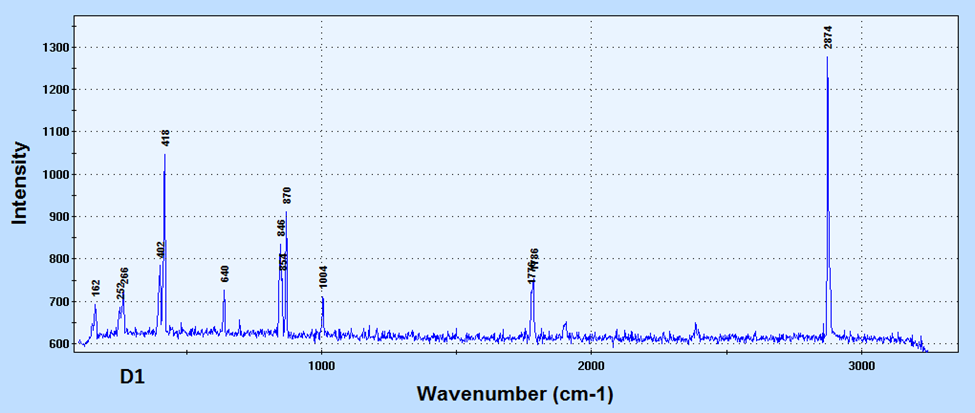
The increasing discharge of toxic and non-biodegradable dyes from textile wastewater poses a significant environmental challenge, necessitating the development of efficient and sustainable treatment technologies. This study investigates the adsorption performance of a CuO--ZnO nanocomposite supported on banana stalk-derived activated carbon (BSAC) for the removal of Cresol Red (CR) dye from aqueous solution. The composite was synthesized via co-precipitation and characterized using X-ray diffraction (XRD), Raman spectroscopy, scanning electron microscopy (SEM), and thermogravimetric/differential thermal analysis (TGA/DTA), confirming the formation of a porous, thermally stable, and structurally integrated material. Batch adsorption experiments were conducted to evaluate the effects of pH (2--10), contact time (5--180 min), adsorbent dosage (0.01--0.10 g), and initial dye concentration. Maximum adsorption was achieved at an equilibrium concentration of 100 mg L-1, pH 6, 0.01 g dosage, and 30 min contact time, with an adsorption capacity of 178.8 mg g-1. Kinetic analysis revealed that the adsorption followed the pseudo-second-order model (R2 =0.9932), indicating chemisorption as the dominant mechanism. Equilibrium data were best described by the Temkin isotherm, while the Freundlich model further suggested multilayer adsorption on a heterogeneous surface. The results demonstrate that the CuO--ZnO/BSAC composite is a low-cost, sustainable, and efficient adsorbent with strong potential for application in dye-contaminated wastewater treatment.
References
[1] S. H. Qasim & D. R. Ibrahim, ``An overview of azo dyes environmental impacts'', GSC Advanced Research and Reviews 24 (2025) 102. https://doi.org/10.30574/gscarr.2025.24.1.0196.
[2] A. P. Periyasamy, ``A review of bioremediation of textile dye containing wastewater'', Cleaner Water 4 (2025) 100092. https://doi.org/10.1016/j.clwat.2025.100092.
[3] M. Berradi, R. Hsissou, M. Khudhair, M. Assouag, O. Cherkaoui, A. El Bachiri & A. El Harfi, ``Textile finishing dyes and their impact on aquatic environs'', Heliyon 5 (2019) e02711. https://doi.org/10.1016/j.heliyon.2019.e02711.
[4] S. Khan & D. Borah, ``Microbial cell factories in the degradation of azo-dye and their limiting factors: An insight'', Cleaner Water 2 (2024) 100034. https://doi.org/10.1016/j.clwat.2024.100034.
[5] R. Al-Tohamy, S. S. Ali, F. Li, K. M. Okasha, Y. A.-G. Mahmoud, T. Elsamahy, H. Jiao, Y. Fu & J. Sun, ``A critical review on the treatment of dye-containing wastewater: Ecotoxicological and health concerns of textile dyes and possible remediation approaches for environmental safety'', Ecotoxicology and Environmental Safety 231 (2022) 113160. https://doi.org/10.1016/j.ecoenv.2021.113160.
[6] T. E. Oladimeji, M. Oyedemi, M. E. Emetere, O. Agboola, J. B. Adeoye & O. A. Odunlami, ``Review on the impact of heavy metals from industrial wastewater effluent and removal technologies'', Heliyon 10 (2024) e40370. https://doi.org/10.1016/j.heliyon.2024.e40370.
[7] A. A. Jimoh, B. H. Akpeji, S. I. Aduwa, D. T. Ogundele, M. J. Johnson, S. O. Azeez, P. O. Akusu & M. E. Udezi, ``Microbial assisted biogenic synthesis of titanium dioxide nanoparticles for enhanced methylene blue removal from aqueous solutions'', Discover Chemistry 3 (2026) 92. https://doi.org/10.1007/s44371-026-00541-8.
[8] J. S. Sravan, L. Matsakas & O. Sarkar, ``Advances in biological wastewater treatment processes: Focus on low-carbon energy and resource recovery in biorefinery context'', Bioengineering 11 (2024) 281. https://doi.org/10.3390/bioengineering11030281.
[9] B. Mohan, C. R. Girish, V. R. Murty, G. Jeppu & S. V. Manjunath, ``Advances in the preparation of activated carbon derived from agricultural waste as a sustainable solution for wastewater treatment: A comprehensive review'', Journal of Hazardous Materials Advances 22 (2026) 101128. https://doi.org/10.1016/j.hazadv.2026.101128.
[10] S. Kainth, P. Sharma & O. P. Pandey, ``Green sorbents from agricultural wastes: A review of sustainable adsorption materials'', Applied Surface Science Advances 19 (2024) 100562. https://doi.org/10.1016/j.apsadv.2023.100562.
[11] Z. U. Zango, A. Garba, F. B. Shittu, S. S. Imam, A. Haruna, M. U. Zango, I. A. Wadi, U. Bello, H. Adamu, B. E. Keshta, D. O. Bokov, O. Baigenzhenov & A. Hosseini-Bandegharaei, ``A state-of-the-art review on green synthesis and modifications of ZnO nanoparticles for organic pollutants decomposition and CO2 conversion'', Journal of Hazardous Materials Advances 17 (2025) 100588. https://doi.org/10.1016/j.hazadv.2024.100588.
[12] W. A. Albuquerque, A. J. N. Filho, Y. Romaguera-Barcelay, S. Medina-Carrasco, M. M. Orta, P. Trigueiro & R. R. Peña-Garcia, ``Synergistic ZnO--CuO/halloysite nanocomposite for photocatalytic degradation of ciprofloxacin with high stability and reusability'', Minerals 15 (2025) 977. https://doi.org/10.3390/min15090977.
[13] S. Kanwal, P. Devi, Z. Ahmed & N. A. Qambrani, ``Adsorption isotherm, kinetic and thermodynamic studies for adsorption of fluoride on waste marble powder'', Desalination and Water Treatment 319 (2024) 100441. https://doi.org/10.1016/j.dwt.2024.100441.
[14] O. P. Murphy, M. Vashishtha, P. Palanisamy & K. V. Kumar, ``A review on the adsorption isotherms and design calculations for the optimization of adsorbent mass and contact time'', ACS Omega 8 (2023) 17407. https://doi.org/10.1021/acsomega.2c08155.
[15] M. M. Rahman, M. E. Kabir, M. M. Islam, M. A. B. H. Susan & M. S. Miran, ``Preparation and characterization of porous carbon material from banana pseudo-stem'', Dhaka University Journal of Science 72 (2024) 63. https://doi.org/10.3329/dujs.v72i1.71190.
[16] S. N. Aziz, A. M. Abdulwahab, T. S. Aldeen & A. A. A. Ahmed, ``Tailoring CdO--CuO--ZnO mixed metal oxide nanocomposites for anticancer activity via co-precipitation method'', Nanotechnology, Science and Applications 18 (2025) 225. https://doi.org/10.2147/NSA.S519229.
[17] I. M. Khaled, M. Umair, C. M. Pecoraro, A. Kheniche, M. Bellardita & S. Soltani, ``Green synthesis of ZnO and CuO nanoparticles and ZnO--CuO nanocomposites: Characterization and photocatalytic dyes removal efficiency's determination'', Colloids and Surfaces A: Physicochemical and Engineering Aspects 728 (2026) 138544. https://doi.org/10.1016/j.colsurfa.2025.138544.
[18] S. N. Chandranna, V. N. Hegde, N. C. Sandhya, B. C. Hemaraju & T. M. Pradeep, ``Green synthesised ZnO/CuO nanocomposites for energy storage, environmental remediation and optoelectronic applications'', ChemPhysMater 5 (2026) 107. https://doi.org/10.1016/j.chphma.2025.10.002.
[19] A. BaQais, M. W. Alam, M. Farhan, G. Muteeb, N. Allag & S. Mushtaq, ``Probe-sonicated synthesis of CuO--ZnO hybrid nanocomposite for photocatalytic and supercapacitor applications'', Inorganics 11 (2023) 370. https://doi.org/10.3390/inorganics11090370.
[20] M. Jeevarathinam & I. V. Asharani, ``Synthesis of CuO, ZnO nanoparticles, and CuO--ZnO nanocomposite for enhanced photocatalytic degradation of Rhodamine B: A comparative study'', Scientific Reports 14 (2024) 9718. https://doi.org/10.1038/s41598-024-60008-7.
[21] S. Fakhraddinfakhriazar, C. Molina-Fernandez & G. Leonard, ``Stability of adsorbents for direct air capture (DAC): Challenges and perspectives'', Energy & Fuels 40 (2026) 4930. https://doi.org/10.1021/acs.energyfuels.5c05460.
[22] S. O. Azeez, A. A. Jimoh, I. O. Saheed, K. O. Otun, A. O. Mustapha & F. A. Adekola, ``Optimization by Box--Behnken design for Eosin Yellow dye removal from aqueous medium using date palm seeds-porous carbon@TiO2 blend'', Journal of the Nigerian Society of Physical Sciences 4 (2022) 183. https://doi.org/10.46481/jnsps.2022.533.
[23] B. Vojnovic, M. Cetina, P. Franjkovic & A. Sutlovic, ``Influence of initial pH value on the adsorption of Reactive Black 5 dye on powdered activated carbon: Kinetics, mechanisms, and thermodynamics'', Molecules 27 (2022) 1349. https://doi.org/10.3390/molecules27041349.
[24] D. O. Ozcan, M. C. Hendekci & B. Ovez, ``Enhancing the adsorption capacity of organic and inorganic pollutants onto impregnated olive stone derived activated carbon'', Heliyon 10 (2024) e32792. https://doi.org/10.1016/j.heliyon.2024.e32792.
[25] M. Salman, M. Demir, K. H. D. Tang, L. T. T. Cao, S. Bunrith, T.-W. Chen, N. M. Darwish, B. M. AlMunqedhi & T. Hadibarata, ``Removal of Cresol Red by adsorption using wastepaper'', Industrial and Domestic Waste Management 2 (2022) 1. https://doi.org/10.53623/idwm.v2i1.63.
[26] M. Akhtar, M. Sarfraz, M. Ahmad, N. Raza & L. Zhang, ``Use of low-cost adsorbent for waste water treatment: Recent progress, new trend and future perspectives'', Desalination and Water Treatment 321 (2025) 100914. https://doi.org/10.1016/j.dwt.2024.100914.
[27] G. B. Adebayo, F. A. Adekola, A. A. Jimoh, F. O. Alao & H. I. Adegoke, ``Adsorption of Cd(II) ions from aqueous solution using activated carbon prepared from Vitellaria paradoxa shell'', NSTI Advanced Materials TechConnect Briefs 3 (2015) 249. https://briefs.techconnect.org/papers/adsorption-of-cd-ii-ions-from-aqueous-solution-using-activated-carbon-prepared-from-vitellaria-paradoxa-shell/.
[28] P. Amaechi, C. Elenwo & S. O. N. Dimkpa, ``Langmuir and Freundlich isotherm models' description of P adsorption capacity of wetland and upland soil in Rivers State'', Global Journal of Agricultural Research 12 (2024) 14. https://doi.org/10.37745/gjar.2013/vol12n31429.
[29] S. Kalam, S. A. Abu-Khamsin, M. S. Kamal & S. Patil, ``Surfactant adsorption isotherms: A review'', ACS Omega 6 (2021) 32342. https://doi.org/10.1021/acsomega.1c04661.
[30] Y. T. Huang & M. C. Shih, ``Kinetic, isotherm, and thermodynamic modeling of Methylene Blue adsorption using natural rice husk: A sustainable approach'', Separations 12 (2025) 189. https://doi.org/10.3390/separations12080189.
[31] N. Idrissov, N. Aidarbekov, Z. Kuspanov, K. Askaruly, O. Tsurtsumia, K. Kuterbekov, Z. Zeinulla, K. Bekmyrza, A. Kabyshev, M. Kubenova & A. Serik, ``Effect of metal modification of activated carbon on the hydrogen adsorption capacity'', Nanomaterials 15 (2025) 1503. https://doi.org/10.3390/nano15191503.
[32] J. Lach & E. Okoniewska, ``Equilibrium, kinetic, and diffusion mechanism of lead(II) and cadmium(II) adsorption onto commercial activated carbons'', Molecules 29 (2024) 2418. https://doi.org/10.3390/molecules29112418.
Published
How to Cite
Issue
Section
Copyright (c) 2026 Akeem Adebayo Jimoh, Wahaab Oluwatobi Waheed (Author)

This work is licensed under a Creative Commons Attribution 4.0 International License.