Phytochemical profiles and evaluation of free radical scavenging activities of Cassiasieberiana using 1,1-diphenyl-2-picryl hydrazyl and2,2′ -Azino-bis-(3-ethylbenzothiazoline-6-sulfonic acid)
Keywords:
Cassia sieberiana, Phytochemicals, DPPH, ABTS, AntioxidantAbstract
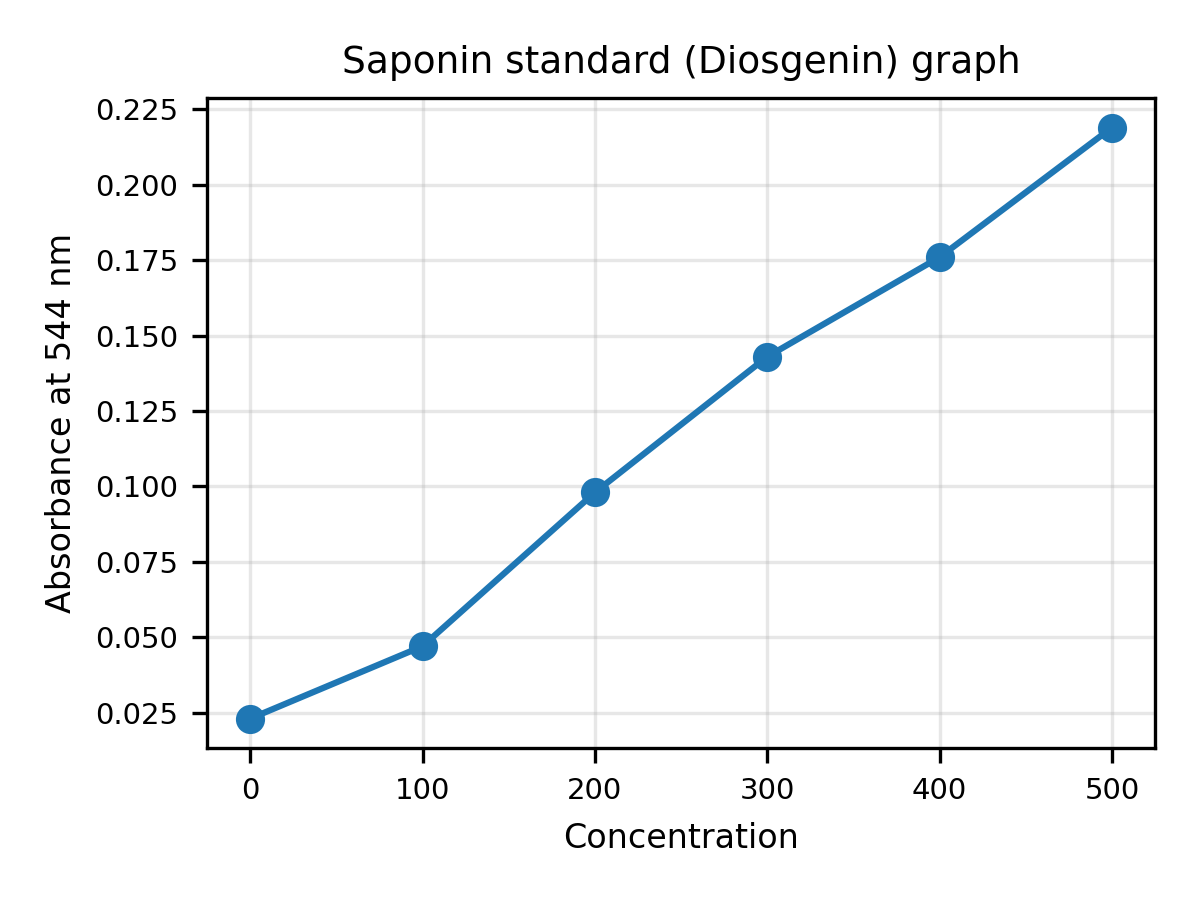
Cassia sieberiana is used in traditional medicine in West Africa, including Nigeria. This study evaluated the phytochemical profile and free radical scavenging activities of C. sieberiana root bark extracts (weighing 100 g). The powdered root bark was extracted with petroleum ether, methyl acetate, acetone, chloroform, methanol (MeOH), and 70% MeOH using a Soxhlet extractor, and the resulting extracts were concentrated under reduced pressure. Methyl acetate, MeOH, and 70% MeOH extracts were analyzed qualitatively and quantitatively using standard phytochemical methods, and their antioxidant activities were assessed using 1,1-diphenyl-2-picryl hydrazyl (DPPH) and 2,2-azinobis-ethyl benzothiozoline-6-sulphonic acid (ABTS) assays. Qualitative analysis indicated the presence of saponins, quinones, phenols, steroids, tannins, flavonoids, terpenoids, anthraquinones, cardiac glycosides, alkaloids, carbohydrates, glycosides, and coumarins in the extracts. The highest contents of flavonoids, phenolics, tannins, saponins, steroids, and alkaloids were recorded in methyl acetate (38.74 µg QE/g), MeOH (259.78 µg GAE/g), methyl acetate (228.67 µg TAE/g), MeOH (961.88 µg DE/g), 70% MeOH (108.08 µg βSSE/g), and 70% MeOH (1.81 µg CE/g), respectively. The extracts showed substantial free radical scavenging activities, with IC50 values of 30.19 µg/mL for the methyl acetate extract in the DPPH assay and 15.20 µg/mL for the methyl acetate extract in the ABTS assay. These findings support the antioxidant potential of C. sieberiana root bark and its possible value as a source of natural antioxidants.
References
[1] T. S. Geetha & N. Geetha, “Phytochemical screening, quantitative analysis of primary and secondary metabolites of Cymbopogon citratus leaves from Kodaikanal Hills, Tamil Nadu”, International Journal of PharmTech Research 6 (2014) 521. https://sphinxsai.com/2014/PTVOL6/PT=17(521-529)AJ14.pdf.
[2] S. Santhiravel, A. E.-D. A. Bekhit, E. Mendis, J. L. Jacobs, F. R. Dunshea, N. Rajapakse & E. N. Ponnampalam, “The impact of plant phytochemicals on the gut microbiota of humans for a balanced life”, International Journal of Molecular Sciences 23 (2022) 8124. https://doi.org/10.3390/ijms23158124.
[3] F. Abbas, Y. Zhou, D. O’Neill Rothenberg, I. Alam, Y. Ke & H.-C. Wang, “Aroma components in horticultural crops: chemical diversity and usage of metabolic engineering for industrial applications”, Plants 12 (2023) 1748. https://doi.org/10.3390/plants12091748.
[4] P. Halagali, A. Inamdar, J. Singh, A. Anand, P. Sadhu, R. Pathak, H. Sharma & D. Biswas, “Phytochemicals, herbal extracts, and dietary supplements for metabolic disease management”, Endocrine, Metabolic & Immune Disorders–Drug Targets 25 (2025) 993. https://doi.org/10.2174/0118715303287911240409055710.
[5] A. A. A. Aljabali, M. A. Obeid, R. M. Bashatwah, E. Qnais, O. Gammoh, A. Alqudah, V. Mishra, et al., “Phytochemicals in cancer therapy: a structured review of mechanisms, challenges, and progress in personalized treatment”, Chemistry & Biodiversity 22 (2025) e202402479. https://doi.org/10.1002/cbdv.202402479.
[6] B. Halliwell, “Understanding mechanisms of antioxidant action in health and disease”, Nature Reviews Molecular Cell Biology 25 (2024) 13. https://doi.org/10.1038/s41580-023-00645-4.
[7] P. Chaudhary, P. Janmeda, A. O. Docea, B. Yeskaliyeva, A. F. A. Razis, B. Modu, D. Calina & J. SharifiRad, “Oxidative stress, free radicals and antioxidants: potential crosstalk in the pathophysiology of human diseases”, Frontiers in Chemistry 11 (2023) 1158198. https://doi.org/10.3389/fchem.2023.1158198.
[8] J. Tauchen, L. Huml, M. Jurasek, J. M. Regenstein & F. Ozogul, “Synthetic and semi-synthetic antioxidants in medicine and food industry: a review”, Frontiers in Pharmacology 16 (2025) 1599816. https://doi.org/10.3389/fphar.2025.1599816.
[9] L. A. Magashi, H. M. Adamu, A. M. Kolo & U. F. Hassan, “Extraction, phytochemicals screening and free radical scavenging activity of methyl acetate extracts from the root barks of Cassia sieberiana”, International Journal of Medical, Biological and Pharmaceutical Sciences 11 (2020) 92. https://www.researchgate.net/publication/348944995.
[10] B. Akbari, N. B. Yazdi, M. Bahmaie & F. M. Abhari, “The role of plant-derived natural antioxidants in reduction of oxidative stress”, BioFactors 48 (2022) 611. https://doi.org/10.1002/biof.1831.
[11] H. S. Elshafie, I. Camele & A. A. Mohamed, “A comprehensive review on the biological, agricultural and pharmaceutical properties of secondary metabolites based on plant origin”, International Journal of Molecular Sciences 24 (2023) 3266. https://doi.org/10.3390/ijms24043266.
[12] M. M. Rahaman, R. Hossain, J. Herrera-Bravo, M. T. Islam, O. Atolani, O. S. Adeyemi, O. A. Owolodun, et al., “Natural antioxidants from some fruits, seeds, foods, natural products, and associated health benefits: an update”, Food Science & Nutrition 11 (2023) 1657. https://doi.org/10.1002/fsn3.3217.
[13] S. H. Hassanpour & A. Doroudi, “Review of the antioxidant potential of flavonoids as a sub-group of polyphenols and partial substitute for synthetic antioxidants”, Avicenna Journal of Phytomedicine 13 (2023) 354. https://www.researchgate.net/publication/373650286_Review_of_the_antioxidant_potential_of_flavonoids_as_a_subgroup_of_polyphenols_and_partial_substitute_for_synthetic_antioxidants.
[14] AOAC, Official Methods of Analysis, 22nd ed., AOAC International (2023). https://www.aoac.org/official-methods-of-analysis/.
[15] J. B. Harborne, Phytochemical Methods: A Guide to Modern Techniques of Plant Analysis, Chapman and Hall Ltd., London (1973) 279. https://www.scirp.org/reference/referencespapers?referenceid=2852380.
[16] R. Re, N. Pellegrini, A. Proteggente, A. Pannala, M. Yang & C. Rice-Evans, “Antioxidant activity applying an improved ABTS radical cation decolorization assay”, Free Radical Biology and Medicine 26 (1999) 1231. https://doi.org/10.1016/s0891-5849(98)00315-3.
[17] A. N. M. Alamgir, “Herbal drugs: their collection, preservation, and preparation; evaluation, quality control, and standardization of herbal drugs”, in Therapeutic Use of Medicinal Plants and Their Extracts: Volume 1: Pharmacognosy, Cham: Springer International Publishing, 2017, pp. 453-495. https://content.e-bookshelf.de/media/reading/L-10237160-be444024e3.pdf.
[18] P. Kapadia, A. S. Newell, J. Cunningham, M. R. Roberts & J. G. Hardy, “Extraction of high-value chemicals from plants for technical and medical applications”, International Journal of Molecular Sciences 23 (2022) 10334. https://doi.org/10.3390/ijms231810334.
[19] A. Cetinkaya, S. Yayla, M. M. Hurkul & S. A. Ozkan, “The sample preparation techniques and their application in the extraction of bioactive compounds from medicinal plants”, Critical Reviews in Analytical Chemistry (2025) 1. https://doi.org/10.1080/10408347.2025.2503437.
[20] R. Darwin, R. Valmon, S. Chithanna, S. H. Galla, S. H. Syed, A. A. M. Billah, K. T. K. Reddy & U. V. N. V. Arjun, “Sustainable extraction and purification of phytochemicals: a review of green solvents and techniques”, Chemical Methodologies 9 (2025) 356. https://doi.org/10.48309/CHEMM.2025.504050.1892.
[21] M. S. Munuo, M. J. Martin, L. F. Shechambo & I. Gervas, “Effect of solvent extraction on phytochemical profile and quantification of bioactive compounds in Ocimum suave (wild)”, Journal of Current Opinion in Crop Science 6 (2025) 27. https://doi.org/10.62773/jcocs.v6i1.304.
[22] N. N. Mahmoud & M. T. Selim, “Phytochemical analysis and antimicrobial activity of Silybum marianum L. via multi-solvent extraction”, AMB Express 15 (2025) 122. https://doi.org/10.1186/s13568-025-01925-2.
[23] L. Burdejova, B. Tobolkova, M. Polovka & J. Neugebauerova, “Differentiation of medicinal plants according to solvents, processing, origin, and season by means of multivariate analysis of spectroscopic and liquid chromatography data”, Molecules 28 (2023) 4075. https://doi.org/10.3390/molecules28104075.
[24] M. T. El-Saadony, A. M. Saad, D. M. Mohammed, S. S. Alkafaas, T. A. Abd El-Mageed, M. A. Fahmy, A. E. Ahmed, et al., “Plant bioactive compounds: extraction, biological activities, immunological, nutritional aspects, food application, and human health benefits–a comprehensive review”, Frontiers in Nutrition 12 (2025) 1659743. https://doi.org/10.3389/fnut.2025.1659743.
[25] A. P. Widiyana & D. N. Illian, “Phytochemical analysis and total flavonoid content on ethanol and ethyl acetate extract from neem (Azadirachta indica Juss.) leaves utilizing UV–Vis spectrophotometric”, Jurnal Farmasi Sains dan Praktis 8 (2022) 60. https://doi.org/10.31603/pharmacy.v8i1.6582.
[26] M. M. Dahiru, A. A. M. Abaka & S. P. Artimas, “Phytochemical analysis and antibacterial activity of methanol and ethyl acetate extracts of Detarium microcarpum Guill. & Perr”, Biology, Medicine, & Natural Product Chemistry 12 (2023) 281. https://doi.org/10.14421/biomedich.2023.121.281-288.
[27] A. Nicolescu, M. Babota, L. Barros, G. Rocchetti, L. Lucini, C. Tanase, A. Mocan, C. I. Bunea & G. Crisan, “Bioaccessibility and bioactive potential of different phytochemical classes from nutraceuticals and functional foods”, Frontiers in Nutrition 10 (2023) 1184535. https://doi.org/10.3389/fnut.2023.1184535.
[28] F. Fernandes, C. Delerue-Matos & C. Grosso, “Unveiling the potential of agrifood by-products: a comprehensive review of phytochemicals, bioactivities and industrial applications”, Waste and Biomass Valorization 16 (2025) 2715. https://doi.org/10.1007/s12649-024-02622-0.
[29] S. Baliyan, R. Mukherjee, A. Priyadarshini, A. Vibhuti, A. Gupta, R. P. Pandey & C.-M. Chang, “Determination of antioxidants by DPPH radical scavenging activity and quantitative phytochemical analysis of Ficus religiosa”, Molecules 27 (2022) 1326. https://doi.org/10.3390/molecules27041326.
[30] M. R. Hasan, M. M. Haque, M. A. Hoque, S. Sultana, M. M. Rahman, M. A. A. Shaikh & M. K. U. Sarker, “Antioxidant activity study and GC–MS profiling of Camellia sinensis Linn”, Heliyon 10 (2024) e23514. https://doi.org/10.1016/j.heliyon.2023.e23514.
[31] I. Gulcin, “Antioxidants: a comprehensive review”, Archives of Toxicology 99 (2025) 1893. https://doi.org/10.1007/s00204-025-03997-2.
[32] A. A. Masresha, D. Marinella, V. Duccio, T. Hagos, T. Frehiwot, D. Eyob & G. G. Solomon, “Phytochemical profiling, antioxidant and anti-inflammatory potential of methanolic extracts of Moringa oleifera (L.) Lam. and Moringa stenopetala (Bak.) Cufod. leaves grown in Arba Minch, Ethiopia”, RSC Advances 15 (2025) 43818. https://doi.org/10.1039/D5RA05914C.
[33] S. Sreelatha & P. R. Padma, “Antioxidant activity of Moringa oleifera leaves”, Food and Chemical Toxicology 47 (2009) 2196. https://doi.org/10.1016/j.fct.2009.06.011.
[34] F. Anwar, S. Latif, M. Ashraf & A. H. Gilani, “Moringa oleifera: a food plant with multiple medicinal uses”, Phytotherapy Research 21 (2006) 17. https://doi.org/10.1002/ptr.2023.
Published
How to Cite
Issue
Section
Copyright (c) 2026 L. A. Magashi (Author)

This work is licensed under a Creative Commons Attribution 4.0 International License.