Influence of solution matrix on the adsorption capacity of NaOH-modified Carica papaya seed for Congo red and malachite green removal
Keywords:
Base-modified adsorbent, Carica papaya seed, Adsorbate molecular mass, Dye adsorptionAbstract
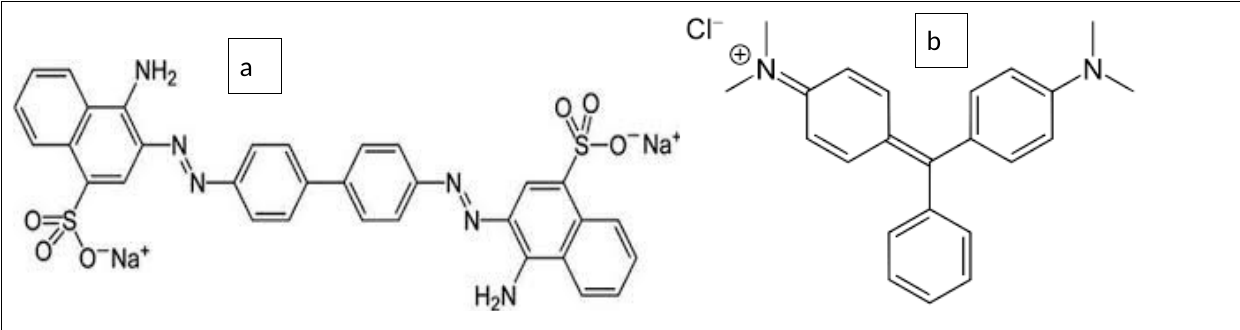
Underutilized agro-based waste Carica papaya seed (CPS) was processed into a base-modified adsorbent for the remediation of malachite green (MG)- and Congo red (CR)-contaminated water. CPS was treated with 300 mL of 0.1 M NaOH for 24 h at room temperature, and the treated adsorbent was denoted as BCPS. BCPS was characterized using scanning electron microscopy (SEM), Fourier transform infrared (FTIR) spectroscopy and pH point of zero charge (pHpzc). Batch adsorption studies were carried out as functions of contact time, adsorbent dose, solution pH, initial adsorbate concentration and temperature. Adsorption isotherm, kinetic and thermodynamic studies were also performed. FTIR analysis indicated surface groups including O--H, C≡C, C=C, C≡N, C--O, C--C and C--H; O--H, C=O, C≡N and C--H were implicated in MG and CR adsorption. The pHpzc of BCPS was 6.2. BCPS showed higher adsorption capacity for MG than CR under most experimental conditions, except pH, where the optimum values for MG and CR adsorption were pH 9 and pH 3, respectively. Maximum adsorption capacities for MG in single and binary systems were 42.37 and 7.62 mg/g, respectively, whereas those for CR were 6.95 and 5.58 mg/g, respectively. Langmuir and pseudo-second-order models best described the isotherm and kinetic data, respectively, and the adsorption processes were thermodynamically feasible.
References
[1] S. A. Adesokan, A. A. Giwa & I. A. Bello, ``Environmental, health and economic implications of emerging contaminants in Nigeria environment'', Journal of the Nigerian Society of Physical Sciences 4 (2022) 842. https://doi.org/10.46481/jnsps.2022.842.
[2] A. Chan, Rubiyatno & Z. Akhmetov, ``Environmental impact of synthetic dyes on groundwater in Malaysia: sources, distribution, transport mechanisms, and mitigation strategies'', Tropical Aquatic and Soil Pollution 4 (2024) 87. https://doi.org/10.53623/tasp.v4i2.476.
[3] M. Abewaa, A. Mengistu, T. Takele, J. Fito & T. Nkambule, ``Adsorptive removal of malachite green dye from aqueous solution using Rumex abyssinicus-derived activated carbon'', Scientific Reports 13 (2023) 14701. https://doi.org/10.1038/s41598-023-41957-x.
[4] Q. Hu & L. Hao, ``Adsorption technologies in wastewater treatment processes'', Water 17 (2025) 2335. https://doi.org/10.3390/w17152335.
[5] J. O. Adinde, O. Ugwuanyi-Nnadi, O. J. Uche & U. J. Anieke, ``Evaluation and selection of pawpaw accessions for production and breeding programmes in Southeast Nigeria using Rank Summation Index (RSI) approach'', Journal of Agricultural Science and Practice 9 (2024) 157. https://doi.org/10.31248/JASP2024.484.
[6] Y. Liu, B. Biswas & R. Naidu, ``Novel adsorbents for environmental remediation'', Processes 12 (2024) 670. https://doi.org/10.3390/pr12040670.
[7] A. Anjum, S. A. Mazari, Z. Hashmi, A. S. Jatoi, R. Abro, A. W. Bhutto, N. M. Mubarak, M. H. Dehghani, R. R. Karri, A. H. Mahvi & S. Nasseri, ``A review of novel green adsorbents as a sustainable alternative for the remediation of chromium(VI) from water environments'', Heliyon 9 (2023) e15575. https://doi.org/10.1016/j.heliyon.2023.e15575.
[8] B. Alawa, S. Singh, S. Chakma, R. Kishor, C. S. Lundborg & V. Diwan, ``Development of novel biochar adsorbent using agricultural waste biomass for enhanced removal of ciprofloxacin from water: insights into the isotherm, kinetics, and thermodynamic analysis'', Chemosphere 375 (2025) 144252. https://doi.org/10.1016/j.chemosphere.2025.144252.
[9] N. D. Shooto & E. B. Naidoo, ``Detoxification of wastewater by pawpaw (Carica papaya L.) seed adsorbents'', Asian Journal of Chemistry 31 (2019) 2249. https://doi.org/10.14233/ajchem.2019.22051.
[10] A. Abdullah & A. Mohammed, ``Scanning electron microscope (SEM): a review'', Proceedings of the 2018 International Conference on Hydraulic and Pneumatics, Baile Govora, Romania, 7--9 November (2018) 77. Available online: https://fluidas.ro/hervex/proceedings2018/77-85.pdf.
[11] S. Muzaffar & H. Tahir, ``Enhanced synthesis of silver nanoparticles by combination of plant extract and starch for the removal of cationic dye from simulated wastewater using response surface methodology'', Journal of Molecular Liquids 252 (2018) 368. https://doi.org/10.1016/j.molliq.2018.01.007
[12] K. S. Baidya & K. Kumar, ``Adsorption of brilliant green dye from aqueous solution onto chemically modified areca nut husk'', South African Journal of Chemical Engineering 35 (2021) 33. https://doi.org/10.1016/j.sajce.2020.11.001
[13] A. A. Giwa, S. A. Adesokan & I. A. Bello, ``Adsorption of pyrimethamine from wastewater using activated carbons prepared from Daniellia-oliveri sawdust'', International Journal of Environmental Analytical Chemistry 103 (2021) 1938. https://doi.org/10.1080/03067319.2021.1884858.
[14] A. A. Giwa, I. A. Bello, M. A. Oladipo & D. O. Aderibigbe, ``Competitive adsorption of Congo red in single and binary systems using a low-cost adsorbent'', Journal of Health and Pollution 11 (2021) 210912. https://doi.org/10.5696/2156-9614-11.31.210912.
[15] O. S. Bello, O. C. Alao, T. C. Alagbada & A. M. Olatunde, ``Biosorption of ibuprofen using functionalized bean husks'', Sustainable Chemistry and Pharmacy 13 (2019) 100151. https://doi.org/10.1016/j.scp.2019.100151.
[16] S. A. Adesokan, A. A. Giwa & I. A. Bello, ``Adsorptive removal of ibuprofen from waste stream using sawdust-based adsorbents'', International Journal of Engineering Research in Africa 55 (2021) 172. https://doi.org/10.4028/www.scientific.net/jera.55.172.
[17] A. Osman & D. Kilic, ``Bioremoval of reactive dye Remazol Navy by Kefir grains'', Applied Biological Chemistry 62 (2019) 22. https://doi.org/10.1186/s13765-019-0429-1.
[18] A. Othmani, A. Kesraoui, R. Boada, M. Seffen & M. Valiente, ``Textile wastewater purification using an elaborated biosorbent hybrid material (luffa-cylindrica--zinc oxide) assisted by alternating current'', Water 11 (2019) 1326. https://doi.org/10.3390/w11071326.
[19] U. Yunusa, B. Usman & M. B. Ibrahim, ``Experimental and quantum chemical investigation for the single and competitive adsorption of cationic dyes onto activated carbon'', Algerian Journal of Engineering and Technology 4 (2021) 7. https://doi.org/10.5281/zenodo.4504565.
[20] O. Lacin, A. Haghighatnia, F. Demir & F. Sevim, ``Adsorption characteristics and behaviors of natural red clay for removal of BY28 from aqueous solutions'', International Journal of Trend in Scientific Research and Development 3 (2019) 1037. Available online: https://paper.researchbib.com/view/paper/211235.
[21] D. Balarak, A. H. Mahvi, S. Shahbaksh, M. A. Wahab & A. Abdala, ``Adsorptive removal of azithromycin antibiotic from aqueous solution by Azolla filiculoides-based activated porous carbon'', Nanomaterials 11 (2021) 3281. https://doi.org/10.3390/nano11123281.
[22] E. Kavci, J. Erkmen & M. S. Bingöl, ``Removal of methylene blue dye from aqueous solution using citric-acid-modified apricot stone'', Chemical Engineering Communications 210 (2023) 165. https://doi.org/10.1080/00986445.2021.2009812.
[23] L. S. Maia, A. I. C. da Silva, E. S. Carneiro, F. M. Monticelli, F. R. Pinhati & D. R. Mulinari, ``Activated carbon from palm fibres used as an adsorbent for methylene blue removal'', Journal of Polymers and the Environment 29 (2021) 1162. https://doi.org/10.1007/s10924-020-01951-0.
[24] M. Bounaas, A. Bouguettoucha, D. Chebli, J. M. Gatica & H. Vidal, ``Role of the wild carob as biosorbent and as precursor of a new high-surface-area activated carbon for the adsorption of methylene blue'', Arabian Journal for Science and Engineering 46 (2021) 325. https://doi.org/10.1007/s13369-020-04739-5.
[25] A. Yildirim & Y. Bulut, ``Adsorption behaviors of malachite green by using crosslinked chitosan/polyacrylic acid/bentonite composites with different ratios'', Environmental Technology & Innovation 17 (2020) 100560. https://doi.org/10.1016/j.eti.2019.100560.
[26] T. Bayram, S. Bucak & D. Ozturk, ``BR13 dye removal using sodium dodecyl sulfate modified montmorillonite: equilibrium, thermodynamic, kinetic and reusability studies'', Chemical Engineering and Processing: Process Intensification 158 (2020) 108186. https://doi.org/10.1016/j.cep.2020.108186.
[27] E. Alver, A. U. Metin & F. Brouers, ``Methylene blue adsorption on magnetic alginate/rice husk bio-composite'', International Journal of Biological Macromolecules 154 (2020) 104. https://doi.org/10.1016/j.ijbiomac.2020.02.330.
[28] P. Zhang, D. O'Connor, Y. Wang, L. Jiang, T. Xia, L. Wang, D. L. Tsang, Y. S. Ok & D. Hou, ``A green biochar/iron oxide composite for methylene blue removal'', Journal of Hazardous Materials 384 (2020) 121286. https://doi.org/10.1016/j.jhazmat.2019.121286.
[29] W. M. Alghamdi & I. El Mannoubi, ``Investigation of seeds and peels of Citrullus colocynthis as efficient natural adsorbent for methylene blue dye'', Processes 9 (2021) 1279. https://doi.org/10.3390/pr9081279.
[30] N. K. Mondal & S. Kar, ``Potentiality of banana peel for removal of Congo red dye from aqueous solution: isotherm, kinetics and thermodynamics studies'', Applied Water Science 8 (2018) 157. https://doi.org/10.1007/s13201-018-0811-x.
[31] G. Bayramoglu & M. Y. Arica, ``Adsorption of Congo red dye by native amine and carboxyl modified biomass of Funalia trogii: isotherms, kinetics and thermodynamic mechanisms'', Korean Journal of Chemical Engineering 35 (2018) 1303. https://doi.org/10.1007/s11814-018-0033-9.
[32] A. Dbik, S. Bentahar, M. El Khomri, N. El Messaoudi & A. Lacherai, ``Adsorption of Congo red dye from aqueous solutions using tunics of the corm of the saffron'', Materials Today: Proceedings 22 (2020) 134. https://doi.org/10.1016/j.matpr.2019.08.148.
[33] A. Saha, B. B. Basak & M. Ponnuchamy, ``Performance of activated carbon derived from Cymbopogon winterianus distillation waste for scavenging of aqueous toxic anionic dye Congo red: comparison with commercial activated carbon'', Separation Science and Technology 33 (2019) 1970. https://doi.org/10.1080/01496395.2019.1620277.
[34] T. T. Roy & N. K. Mondal, ``Potentiality of Eichhornia shoots ash towards removal of Congo red from aqueous solution: isotherms, kinetics, thermodynamics and optimization studies'', Groundwater for Sustainable Development 9 (2019) 100269. https://doi.org/10.1016/j.gsd.2019.100269.
[35] D. J. Faheem, J. Bao, M. A. Hassan, S. Irshad & M. A. Talib, ``Multi-functional biochar novel surface chemistry for efficient capture of anionic Congo red dye: behaviour and mechanism'', Arabian Journal for Science and Engineering 44 (2019) 10127. https://doi.org/10.1007/s13369-019-04194-x.
[36] G. S. M. Reddy, M. Bhaumik & A. Maity, ``Removal of Congo red from aqueous solution by adsorption using gum ghatti and acrylamide graft copolymer coated with zero-valent iron'', International Journal of Biological Macromolecules 149 (2020) 21. https://doi.org/10.1016/j.ijbiomac.2020.01.099.
[37] S. A. H. Azaman, A. Afandi, B. H. Hameed & A. T. Mohd Din, ``Removal of malachite green from aqueous phase using coconut shell activated carbon: adsorption, desorption, and reusability studies'', Journal of Applied Science and Engineering 21 (2018) 317. https://www.researchgate.net/publication/328694563_Removal_of_malachite_green_from_aqueous_phase_using_coconut_shell_activated_carbon_Adsorption_desorption_and_reusability_studies.
[38] S. A. Odoemelam, U. N. Emeh & N. O. Eddy, ``Experimental and computational chemistry studies on the removal of methylene blue and malachite green dyes from aqueous solution by neem (Azadirachta indica) leaves'', Journal of Taibah University for Science 12 (2018) 255. https://doi.org/10.1080/16583655.2018.1465725.
[39] S. L. Lee, J. H. Park, S. H. Kim, S. W. Kang, J. S. Cho, J. R. Jeon, Y. B. Lee & D. C. Seo, ``Sorption behavior of malachite green onto pristine lignin to evaluate the possibility as a dye adsorbent by lignin'', Applied Biological Chemistry 62 (2019) 37. https://doi.org/10.1186/s13765-019-0444-2.
[40] S. Hajialigol & S. Masoum, ``Optimization of biosorption potential of nano biomass derived from walnut shell for the removal of malachite green from liquid solution: experimental design approaches'', Journal of Molecular Liquids 286 (2021) 110904. https://doi.org/10.1016/j.molliq.2019.110904.
[41] G. Y. Abate, A. N. Alene, A. T. Habte & D. M. Getahun, ``Adsorptive removal of malachite green dye from aqueous solution onto activated carbon of Catha edulis stem as a low-cost bio-adsorbent'', Environmental Systems Research 9 (2020) 29. https://doi.org/10.1186/s40068-020-00191-4.
[42] A. N. Alene, G. Y. Abate, A. T. Habte & D. M. Getahun, ``Utilization of a novel low-cost gibto (Lupinus albus) seed peel waste for the removal of malachite green dye: equilibrium, kinetic, and thermodynamic studies'', Journal of Chemistry (2021) 6618510. https://doi.org/10.1155/2021/6618510.
[43] T. R. Sundararaman, A. Saravanan, P. S. Kumar, M. M. Mabel, R. V. Hemavathy, S. Karishma, S. Jeevanantham, R. Hemavathi, A. Ishwariya & Kowsalya, ``Adsorptive removal of malachite green dye onto coal-associated soil and conditions optimization'', Adsorption Science & Technology (2021) 5545683. https://doi.org/10.1155/2021/5545683.
[44] N. Razmara, H. Namarvari & J. R. Meneghini, ``A new correlation for viscosity of model water--carbon nanotube nanofluids: molecular dynamics simulation'', Journal of Molecular Liquids 293 (2019) 111438. https://doi.org/10.1016/j.molliq.2019.111438.
[45] L. Loulidi, F. Boukhlifi, M. Ouchabi, A. Amar, M. Jabri, A. Kali, S. Chraibi & H. Aziz, ``Adsorption of crystal violet onto an agricultural waste residue: kinetics, isotherm, thermodynamics, and mechanism of adsorption'', Scientific World Journal 2020 (2020) 5873521. https://doi.org/10.1155/2020/5873521.
[46] E. A. Khan, Shahjahan & T. A. Khan, ``Synthesis of magnetic iron--manganese oxide coated graphene oxide and its application for adsorptive removal of basic dyes from aqueous solution: isotherm, kinetics, and thermodynamic studies'', Environmental Progress & Sustainable Energy 38 (2019) S214. https://doi.org/10.1002/ep.12974.
[47] H. A. Chanzu, J. M. Onyari & P. M. Shiundu, ``Brewers' spent grain in adsorption of aqueous Congo red and malachite green dyes: batch and continuous flow systems'', Journal of Hazardous Materials 380 (2019) 120897. https://doi.org/10.1016/j.jhazmat.2019.120897.
[48] L. Lin, S. Tang, X. Wang, X. Sun & A. Yu, ``Adsorption of malachite green from aqueous solution by nylon microplastics: reaction mechanism and the optimum conditions by response surface methodology'', Process Safety and Environmental Protection 140 (2020) 339. https://doi.org/10.1016/j.psep.2020.05.019.
[49] T. Altun, ``Chitosan-coated sour cherry kernel shell beads: an adsorbent for removal of Cr(VI) from acidic solutions'', Journal of Analytical Science and Technology 10 (2019) 14. https://doi.org/10.1186/s40543-019-0172-6.
[50] Z. Bingul, ``The use of waste green tea leaves for crystal violet adsorption: kinetic and thermodynamic studies'', Journal of the Institute of Science and Technology 11 (2021) 2645. https://www.researchgate.net/publication/357084040_The_Use_of_Waste_Green_Tea_Leaves_for_Crystal_Viyole_Adsorption_Kinetic_Equilibrium_and_Thermodynamics_Studies1003271-2004279.
[51] J. Sheeja, K. Sampath & R. Kesavasamy, ``Experimental investigations on adsorption of reactive toxic dyes using Hedyotis umbellate activated carbon'', Adsorption Science & Technology 2021 (2021) 5035539. https://doi.org/10.1155/2021/5035539.
Published
How to Cite
Issue
Section
Copyright (c) 2026 Saheed Ademola Adesokan, Adetayo Damola Adelakin, Abdur-Rahim Adebisi Giwa, Deborah Olubunmi Aderibigbe (Author)

This work is licensed under a Creative Commons Attribution 4.0 International License.