SmoteGAN and TabNet: a hybrid framework for detecting pump-and-dump schemes in cryptocurrency markets
Keywords:
cryptocurrency fraud detection,, pump-and-dump schemes, class imbalance, SmoteGAN augmentationAbstract
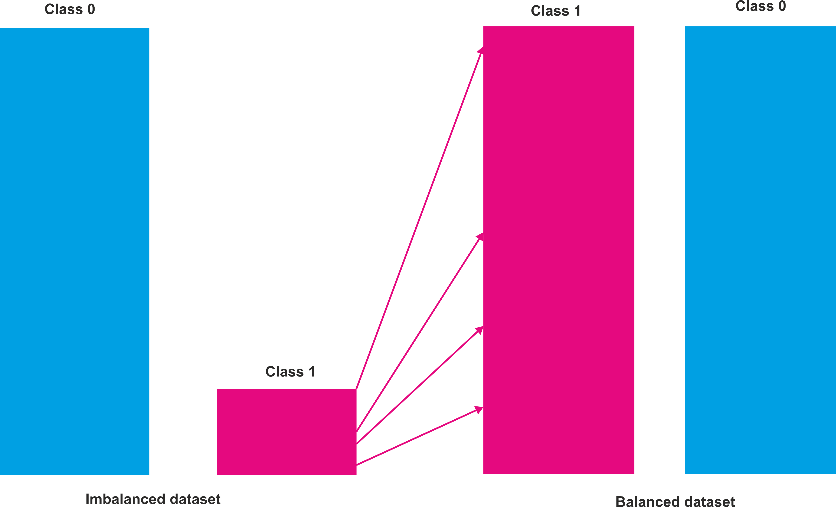
This paper describes a new method for detecting pump-and-dump (P&D) schemes in cryptocurrency markets, an important cybersecurity problem because of the large financial losses suffered by investors as a result of market manipulation and cyber-enabled attacks. Current P&D detection methods often fail to keep pace with changing manipulation strategies, particularly because transaction data are highly imbalanced. This study proposes a hybrid approach that combines generative adversarial networks (GANs) and TabNet to address these limitations. In the proposed framework, a GAN variant, SmoteGAN, is used to create synthetic P&D transaction samples and augment the original training data for the TabNet classification model. This mitigates class imbalance and allows TabNet to learn feature relationships sequentially through its attention mechanism. Evaluation on 25-second intervals of cryptocurrency P&D transaction data shows that the developed model achieved a precision of 98%, recall of 83% and F1-score of 90%, outperforming several existing state-of-the-art methods for detecting pump-and-dump schemes. The findings provide a hybrid method for improving cybersecurity in cryptocurrency markets by enhancing the detection of market manipulation and supporting a safer trading environment.
References
[1] S. Foley, J. R. Karlsen & T. J. Putni??, “Sex, drugs, and bitcoin: how much illegal activity is financed through cryptocurrencies?”, The Review of Financial Studies 32 (2019) 1798. https://doi.org/10.1093/rfs/hhz015.
[2] J. Kamps & B. Kleinberg, “To the moon: defining and detecting cryptocurrency pump-and-dumps”, Crime Science 7 (2018) 18. https://doi.org/10.1186/s40163-018-0093-5.
[3] J. T. Hamrick, F. Rouhi, A. Mukherjee, M. Vasek, T. Moore & N. Gandal, “Analyzing target-based cryptocurrency pump and dump schemes”, in Proc. 2021 ACM CCS Workshop on Decentralized Finance and Security, 2021, pp. 21. https://doi.org/10.1145/3464967.3488591.
[4] M. La Morgia, A. Mei, F. Sassi & J. Stefa, “The doge of Wall Street: analysis and detection of pump and dump cryptocurrency manipulations”, ACM Transactions on Internet Technology 23 (2023) 1. https://doi.org/10.1145/3561300.
[5] A. Dhawan & T. J. Putni??, “A new wolf in town? Pump-and-dump manipulation in cryptocurrency markets”, Review of Finance 27 (2023) 935. https://doi.org/10.1093/rof/rfac051.
[6] F. Victor & T. Hagemann, “Cryptocurrency pump and dump schemes: quantification and detection”, in Proc. 2019 International Conference on Data Mining Workshops (ICDMW), 2019, pp. 244. https://doi.org/10.1109/ICDMW.2019.00045.
[7] D. Fantazzini & Y. Xiao, “Detecting pump-and-dumps with crypto-assets: dealing with imbalanced datasets and insiders’ anticipated purchases”, Econometrics 11 (2023) 22. https://doi.org/10.3390/econometrics11030022.
[8] M. Bartoletti, S. Carta, T. Cimino & L. Saia, “Dissecting Ponzi schemes on Ethereum: identification, analysis, and impact”, Future Generation Computer Systems 102 (2020) 259. https://doi.org/10.1016/j.future.2019.08.014.
[9] A. Dal Pozzolo, O. Caelen, R. A. Johnson & G. Bontempi, “Calibrating probability with undersampling for unbalanced classification”, in 2015 IEEE Symposium Series on Computational Intelligence, 2015, pp. 159. https://doi.org/10.1109/SSCI.2015.33.
[10] S. O. Arik & T. Pfister, “TabNet: attentive interpretable tabular learning”, Proceedings of the AAAI Conference on Artificial Intelligence 35 (2021) 6679. https://doi.org/10.1609/aaai.v35i8.16826.
[11] M. La Morgia, A. Mei, F. Sassi & J. Stefa, “Pump and dumps in the bitcoin era: real-time detection of cryptocurrency market manipulations”, in Proc. 2020 29th International Conference on Computer Communications and Networks (ICCCN), 2020, pp. 1. https://doi.org/10.1109/ICCCN49398.2020.9209660.
[12] SystemsLab-Sapienza, “Pump and dump dataset”, GitHub, 2021. Available online: https://github.com/SystemsLab-Sapienza/pump-and-dump-dataset.
[13] R. K. Aggarwal & G. Wu, “Stock market manipulations”, The Journal of Business 79 (2006) 1915. https://doi.org/10.1086/503652.
[14] M. T. Tran, N. Sohrabi, Z. Tari & Q. Wang, “How to cook the fragmented rug pull?”, arXiv preprint arXiv:2511.15463, 2025. https://doi.org/10.48550/arXiv.2511.15463.
[15] N. Gandal, J. T. Hamrick, T. Moore & T. Oberman, “Price manipulation in the Bitcoin ecosystem”, Journal of Monetary Economics 95 (2018) 86. https://doi.org/10.1016/j.jmoneco.2017.12.004.
[16] T. Li, D. Shin & B. Wang, “Cryptocurrency pump-and-dump schemes”, Journal of Financial and Quantitative Analysis 60 (2025) 3622. https://doi.org/10.1017/S0022109025000201.
[17] R. Mitchell & R. Chen, “Behavior-rule based intrusion detection systems for safety critical smart grid applications”, IEEE Transactions on Smart Grid 4 (2013) 1254. https://doi.org/10.1109/TSG.2013.2258948.
[18] P. Priyadarshi & P. Kumar, “A comprehensive review on insider trading detection using artificial intelligence”, Journal of Computational Social Science (2024) 1. https://doi.org/10.1007/s42001-024-00284-5.
[19] Z. Chen, S. Wang, D. Yan & Y. Li, “Research and implementation of bank credit card fraud detection system based on reinforcement learning and LSTM”, in Proc. 2023 3rd International Conference on Mobile Networks and Wireless Communications (ICMNWC), 2023, pp. 1. https://doi.org/10.1109/ICMNWC60182.2023.10435890.
[20] J. Xu & B. Livshits, “The anatomy of a cryptocurrency pump-and-dump scheme”, in Proc. USENIX Security Symposium, Santa Clara, CA, USA, Aug. 2019, pp. 1609. Available online: https://dl.acm.org/doi/10.5555/3361338.3361450.
[21] T. M. Mitchell, Machine Learning, 1st ed. McGraw-Hill, New York, NY, USA, 1997. Available online: https://dl.acm.org/doi/10.5555/541177.
[22] T. Hastie, R. Tibshirani, J. H. Friedman & J. H. Friedman, The Elements of Statistical Learning: Data Mining, Inference, and Prediction, 2nd ed. Springer, New York, NY, USA, 2001. https://doi.org/10.1007/978-0-387-21606-5.
[23] M. J. Rajaei & Q. H. Mahmoud, “A survey on pump and dump detection in the cryptocurrency market using machine learning”, Future Internet 15 (2023) 267. https://doi.org/10.3390/fi15080267.
[24] S. Shao, “The effectiveness of supervised learning models in detection of pump and dump activity in Dogecoin”, in Proc. Second IYSF Academic Symposium on Artificial Intelligence and Computer Engineering 12079 (2021) 356. https://doi.org/10.1117/12.2622877.
[25] V. Chadalapaka, K. Chang, G. Mahajan & A. Vasil, “Crypto pump and dump detection via deep learning techniques”, arXiv preprint arXiv:2205.04646, 2022. https://doi.org/10.48550/arXiv.2205.04646.
[26] D. Alfano, R. Abbruzzese & D. Parente, “Pump and dump cryptocurrency detection using social media”, in Proc. International Conference on Data (DATA), 2023, pp. 235. https://doi.org/10.5220/0012059300003541.
[27] N. V. Chawla, K. W. Bowyer, L. O. Hall & W. P. Kegelmeyer, “SMOTE: synthetic minority over-sampling technique”, Journal of Artificial Intelligence Research 16 (2002) 321. https://doi.org/10.1613/jair.953.
[28] G. Menardi & N. Torelli, “Training and assessing classification rules with imbalanced data”, Data Mining and Knowledge Discovery 28 (2014) 92. https://doi.org/10.1007/s10618-012-0295-5.
[29] C. Tantithamthavorn, A. E. Hassan & K. Matsumoto, “The impact of class rebalancing techniques on the performance and interpretation of defect prediction models”, IEEE Transactions on Software Engineering 46 (2020) 1200. https://doi.org/10.1109/TSE.2018.2876537.
[30] T. Wongvorachan, S. He & O. Bulut, “A comparison of undersampling, oversampling, and SMOTE methods for dealing with imbalanced classification in educational data mining”, Information 14 (2023) 54. https://doi.org/10.3390/info14010054.
[31] H. Nghiem, G. Muric, F. Morstatter & E. Ferrara, “Detecting cryptocurrency pump-and-dump frauds using market and social signals”, Expert Systems with Applications 182 (2021) 115284. https://doi.org/10.1016/j.eswa.2021.115284.
[32] R. Sauber-Cole & T. M. Khoshgoftaar, “The use of generative adversarial networks to alleviate class imbalance in tabular data: a survey”, Journal of Big Data 9 (2022) 98. https://doi.org/10.1186/s40537-022-00648-6.
[33] A. Sharma, P. K. Singh & R. Chandra, “SMOTified-GAN for class imbalanced pattern classification problems”, IEEE Access 10 (2022) 30655. https://doi.org/10.1109/ACCESS.2022.3158977.
Published
How to Cite
Issue
Section
Copyright (c) 2026 Umar Faruq Abdulrazaq, Muhammad Nazeer Musa (Author)

This work is licensed under a Creative Commons Attribution 4.0 International License.