Fabrication and characterization of dye-sensitized solar cells using Allium cepa flower extract as a means of harnessing the solar energy
Keywords:
Allium cepa, Organic solar cell, DSSC efficiency, Fill factor, Current voltage simulationAbstract
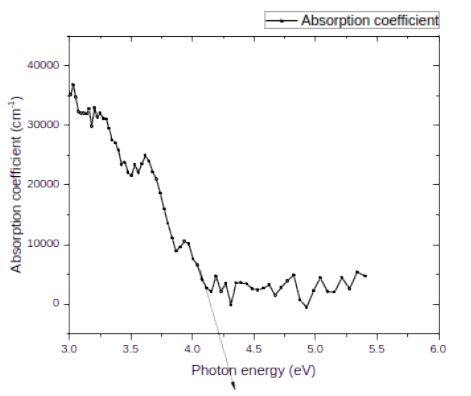
Climate change and global warming have spurred a growing urgency to transition from traditional energy sources to sustainable alternatives. This article explores the realm of renewable energy, focusing on the potential of dye-sensitized solar cells (DSSCs) as an eco-friendly solution. The study examines the efficiency of a DSSC utilizing a dye extract from Allium Cepa (onion) flowers, shedding light on the material's viability as a photosensitizer. The article covers the physics of solar cells, the operation principle of DSSCs, and the specific components involved in fabricating a DSSC based on Allium Cepa extract. The findings show that the extract obtained from Allium Cepa flower exhibited maximum absorbance of 1.4793 at a wavelength of 437.74 nm in the visible region of the electromagnetic spectrum. And when adsorbed on the TiO2 semiconductor surface, the absorbance of the sample increased to the value of 1.5189 at a wavelength of 423.89 nm in the visible region. The energy bandgap of 4.21 eV was obtained for Allium Cepa extract. The fill factor of 0.61 was obtained, and a light conversion efficiency of 0.43 % was achieved. With these results, the dye extract obtained from dry Allium Cepa flowers is a good photosensitizer for making dye-sensitized solar cells.
References
[1] A. Bahl & S. B. Tuli, Essential of physical chemistry, Revised multicolour edition, Ragendra Ravindra Publishers, Kamnagar, New Delhi-110055, 2012, pp. 1105–1106. https://lib.zu.edu.pk/ebookdata/Pharmacy/Pharmaceutics/Essentials%20Of%20Physical%20Chemistry%20-%20Arun%20Bahl%20_%20B.s.%20Bahl.pdf.
[2] E. Supriyanto, H. A. Karikasari, N. Alviati & G. Wiranto, “Simulation of dye-sensitized solar cells performance for various local natural dye photon sensitizers”, in IOP Conference Series: Materials Science and Engineering 515 (2019) 012048. https://doi.org/10.1088/1757-899X/515/1/012048. DOI: https://doi.org/10.1088/1757-899X/515/1/012048
[3] E. B. Ituen & U. D. Archibong, “Onion Peel Dye-nanocomposite as light harvester in Dye-sensitized solar cells”, World Journal of Applied Science and Technology 13 (2021) 43. https://www.ajol.info/index.php/wojast/article/view/227428/214685.
[4] H. Ellis, Characterization of dye – sensitized solar cells: components for environmentally friendly photovoltaic, Ph.D. dissertation, Department of Physical Chemistry, Uppsala Universitet, Sweden, 2013. https://www.diva-portal.org/smash/get/diva2:738421/FULLTEXT01.pdf.
[5] A. M. Al-Kahlout, H. S. El-Ghamri, N. A. Dahoudi, T. M. El-agez, S. A. Taya & M. S. Abdel-latif, “A comparative study: synthetic dyes as photosensitizers for dye-sensitized solar cells”, Turkish Journal of Physics 39 (2015) 272. https://doi.org/10.3906/fiz-1504-6. DOI: https://doi.org/10.3906/fiz-1504-6
[6] F. Delgado-vargas, A. R. Jimenez & O. Paredes-Lopez, “Natural pigments: carotenoids, anthocyanins, and betalains — characteristics, biosynthesis, processing, and stability”, Critical Reviews in Food Science and Nutrition 40 (2010) 173. https://doi.org/10.1080/10408690091189257. DOI: https://doi.org/10.1080/10408690091189257
[7] S. E. Omoyibo, M. O. Osiele, A. Ohwofosirai & E. E. Amiegbereta, “Deposition and characterization of as-grown and annealed titanium dioxide (TiO2 ) thin film”, Physics of the Solid State 66 (2024) 662. https://doi.org/10.1134/S1063783424601395. DOI: https://doi.org/10.1134/S1063783424601395
[8] U. I. Ndeze, J. Aidan, C. E. Sabashre & J. F. Wansah, “Comparative performances of nature-based dyes extracted from Baobab and Shea leaves photo-sensitizers for dye-sensitized solar cells (DSSCs)”, Current Research in Green and Sustainable Chemistry 4 (2021) 100105. https://doi.org/10.1016/j.crgsc.2021.100105. DOI: https://doi.org/10.1016/j.crgsc.2021.100105
[9] E. J. Khalil, C. Seamas, F. Z. Henari & A. A. Dakhal, “Curcuma dye-sensitized solar cell”, Journal of Energy and Power Engineering 11 (2017) 409. https://doi.org/10.17265/1934-8975/2017.06.006. DOI: https://doi.org/10.17265/1934-8975/2017.06.006
[10] M. K. Nazeeddin, E. Baranoff & M. Gratzel, “Dye-sensitized solar cells: A brief overview”, Solar Energy 85 (2011) 1172. https://doi.org/10.1016/j.solener.2011.01.018. DOI: https://doi.org/10.1016/j.solener.2011.01.018
[11] O. A. Oyekanmi, S. Amolea, Akinrinola, O. Adedokun, A. K. Dauda, F. A. Ojeniyia & A. O. Awodugba, “Reduced graphene oxide as the electron transport layer in perovskite solar cell: effect on the photovoltaic performance”, Recent Advances in Natural Sciences 2 (2024) 116. https://doi.org/10.61298/rans.2024.2.2.116. DOI: https://doi.org/10.61298/rans.2024.2.2.116
[12] A. S. Djibrilla, M. Badu, A. M. Johannes, Awudza & N. O. Boadi, “Development of TiO2 -based dye-sensitized solar cells using natural dyes extracted from some plant-based materials”, Chemistry International 7 (2020) 9. https://doi.org/10.5281/zenodo.4018012.
[13] U. B. Osolobri, O. E. O. Enaroseha & S. E. Omoyibo, “Performance evaluation of dye-sensitized solar cell using bougainvillea flower dye extracts”, International Journal of Applied and Physical Sciences 9 (2023) 42. https://dx.doi.org/10.20469/ijaps.9.50005.
[14] S. K. Moutari, A. M. Abdoulkadri, A. S. Boulhassane, A. Rabani & I. Khalid, “Determination contents of total phenolic pigments and spectrophotometric characterization of crude extracts of ten tinctorial plants of Niger which is usable in solar energy”, European Scientific Journal 14 (2018) 389. https://doi.org/10.19044/esj.2018.v14n33p389. DOI: https://doi.org/10.19044/esj.2018.v14n33p389
[15] A. A. Bristi, S. M. Jahadun-Nobi, N. Abser & M. Hassan, “Performance comparison of low efficiency natural dye-sensitized solar cell”, American Journal of Electrical Power and Energy System 9 (2020) 60. https://doi.org/10.11648/j.epes.20200904.11. DOI: https://doi.org/10.11648/j.epes.20200904.11
[16] E. Muchuweni, T. E. Mombeshora, C. M. Muiva, T. S. Sathiaraj, A. Yildiz & D. Pugliese, “Towards high-performance dye-sensitized solar cells by utilizing reduced graphene oxide-based composites as potential alternatives to conventional electrodes: A review”, Next Materials 6 (2025) 100477. https://doi.org/10.1016/j.nxmate.2024.100477. DOI: https://doi.org/10.1016/j.nxmate.2024.100477
[17] J. Conradie, “Effective dyes for DSSCs–important experimental and calculated parameters”, Energies Nexus 13 (2024) 100282. https://doi.org/10.1016/j.nexus.2024.100282. DOI: https://doi.org/10.1016/j.nexus.2024.100282
[18] K. Sharma, V. Sharma & S. S. Sharma, “Dye-sensitized solar cells: Fundamentals and current status”, Nanoscale Research Letters 13 (2018) 381. https://doi.org/10.1186/s11671-018-2760-6. DOI: https://doi.org/10.1186/s11671-018-2760-6
Published
How to Cite
Issue
Section
Copyright (c) 2026 Samuel Emuvokeraye Omoyibo, Blessing Uyoyou Osolebri, Lawrence Oghenerivwe Anho, Ufuoma Alexander Odenema

This work is licensed under a Creative Commons Attribution 4.0 International License.